
Wind turbine mould removal, done properly
Mould, mildew and biofilm colonise the sealed, humid interiors of offshore wind turbines. Getting it off the surface is a chemistry job. Keeping it off is a moisture job. You need both, and we will be straight with you about which one we do.
Why mould grows inside wind turbines
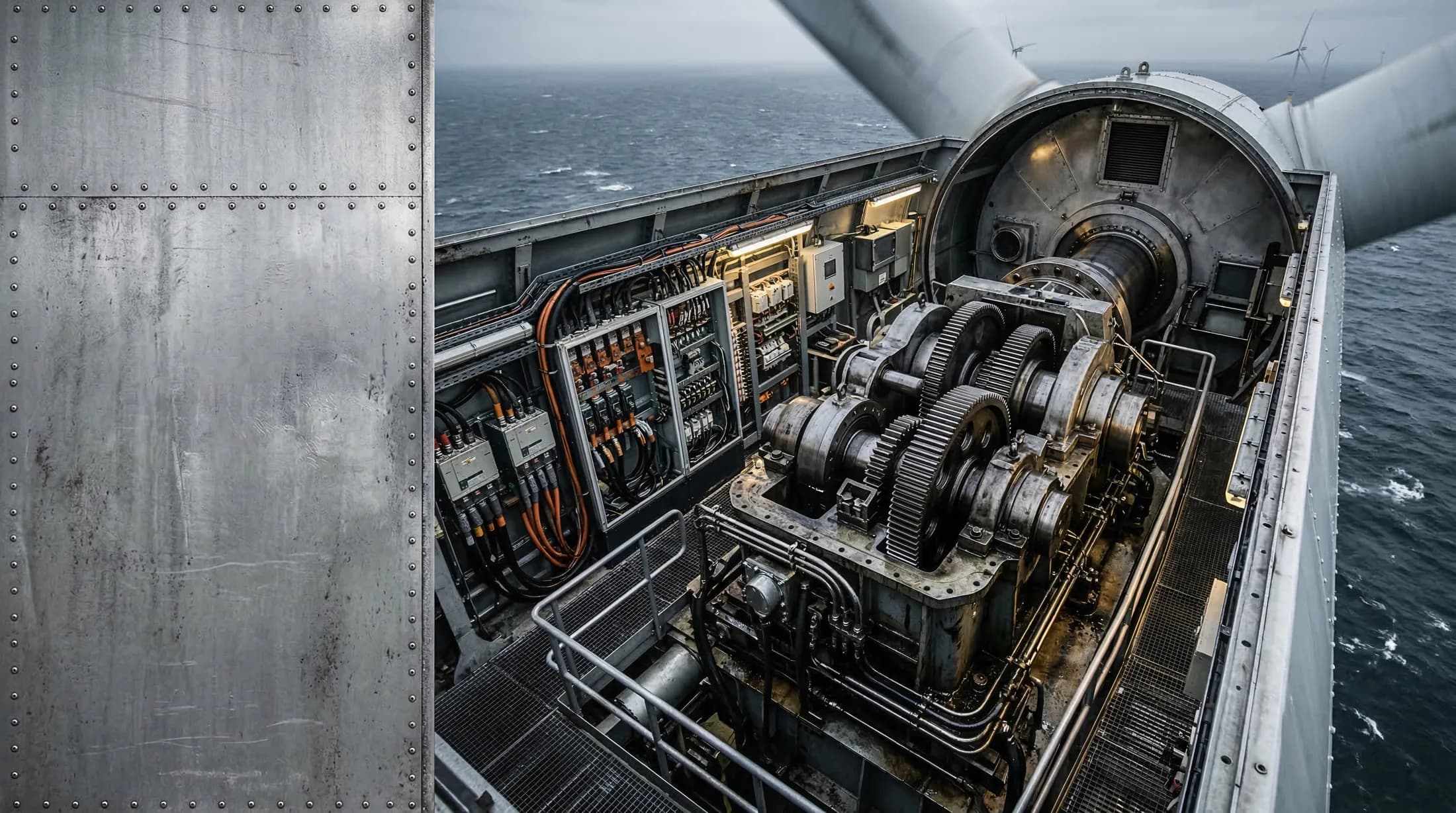
A wind turbine interior is close to a perfect incubator. The tower is a hollow steel cylinder rising 80 to 100 metres; the nacelle is packed with equipment that throws off heat; the marine atmosphere drives salt-laden humidity into every cavity. Ventilation is minimal, and the spaces sit undisturbed for months between maintenance visits.
Warm, damp, dark and left alone, those surfaces grow mould, mildew and biofilm. It is a maintenance problem and a worker-health problem at the same time, because technicians breathe that air for hours at a time. For the full picture of what builds up inside a turbine, see the hidden hazard inside offshore turbines.
Removal and prevention are two different jobs
Most current approaches do one job and leave the other undone. A rope-access team can scrub visible mould away during a visit. A dehumidifier lowers the humidity and slows new growth. Do the first without the second and the interior recolonises, because the conditions that grew it never changed.
Here is the part the industry tends to skirt around. A turbine tower is ventilated to the outside, so airborne spores drift back in continuously. No product on the market sterilises that environment, and anyone claiming their chemistry alone stops mould returning is overselling. Prevention comes from managing moisture and cleaning on a sensible interval. Our job is the removal, done thoroughly enough that the interval can be a long one.
How TurbineClean removes mould
TurbineClean is built on quaternary ammonium compounds. They disrupt microbial cell membranes on contact, which is what breaks the growth down and lifts mould, mildew and biofilm off the surface instead of smearing it across the coating.
It is applied at 1 part concentrate to 5 parts clean water. Every surface gets two passes with a 30 second dwell, the first to take the growth off and the second on the cleaned surface, then a clean water rinse and wipe dry. The rinse matters: leave the product on the surface and it dries as a residue, which is why the method ends with water rather than with us claiming the film does something useful.
It is water-based, not classified as flammable, and mild enough at around pH 8 to leave coatings, seals and composites intact, so it treats the biology without damaging the ISO 12944 coating system that protects the asset. See the full product formulation and specification, or the safety and compliance profile for confined-space use.
Built for the biological contamination degreasers leave behind
Mould and mildew
The visible growth on walls, ladders, and platform surfaces inside towers and nacelles.
Biofilm
The harder-to-see microbial layer that traps moisture against coated surfaces.
Algae and damp-driven growth
Green growth and colonisation driven by persistent internal humidity.
Surface staining
The discolouration left on coatings and platforms once growth has taken hold.
Wind turbine mould removal: common questions
How do you remove mould from inside a wind turbine?+
Degrease any oil or grease first, then apply an antimicrobial treatment that kills mould and mildew on contact. TurbineClean is diluted 1 part to 5 parts clean water and applied to internal surfaces by rope-access or maintenance technicians during a scheduled visit. Every surface gets two passes with a 30 second dwell, then a clean water rinse and wipe dry.
Why does mould keep coming back inside wind turbines?+
Turbine interiors are sealed, warm and humid, with little ventilation and often six months between maintenance visits. A clean removes what is there on the day, but it does not change the damp conditions that grew it, and a tower is ventilated to the outside so spores drift back in. Breaking the cycle means managing moisture as well as cleaning. No chemical alone will do it.
Is the treatment safe for turbine coatings?+
Yes. TurbineClean is mildly alkaline at around pH 8 and is compatible with the full range of interior materials, including epoxy and polyurethane coatings, GRP, CFRP, aluminium, rubber seals and galvanised surfaces. It is formulated to clean without attacking the ISO 12944 coating system.
Is it safe to use in confined spaces?+
The diluted working solution is water-based, low odour and not classified as flammable, with a flash point above 65 °C. That suits confined nacelles and towers where technicians work for hours near electrical and hydraulic systems. The concentrate itself is corrosive and should be diluted in open air where the task allows, so check the Safety Data Sheet before building your COSHH assessment.
Does dehumidification remove mould from wind turbines?+
Dehumidification lowers humidity and slows new growth, but it does not remove mould, mildew or biofilm that is already present. The two approaches are complementary: dehumidification manages the conditions, and an antimicrobial treatment removes and suppresses the contamination itself.
Mould, mildew or biofilm: what is actually growing inside turbines?+
Usually a mix of mould, mildew, algae and biofilm, driven by damp, unventilated interiors. TurbineClean uses quaternary ammonium chemistry, which works on cell membranes and so addresses biological contamination broadly rather than targeting a single organism.
Request the evidence for your assessment
Get the Safety Data Sheet, COSHH-ready data pack, surface-compatibility notes, and dilution guidance. No commitment, just the data your team needs to evaluate and approve.