
We would rather know what is growing in your turbines than guess
Send us samples from a visit already in your diary. Our laboratory identifies what is actually colonising the interior, then matches the formulation to it, to your coating system and to the way your crews work. The formulation work is free of charge.
Most industrial chemicals are sold blind
You describe the problem over the phone, somebody recommends a drum, and it either works or it does not. When it does not, the usual advice is to use more of it.
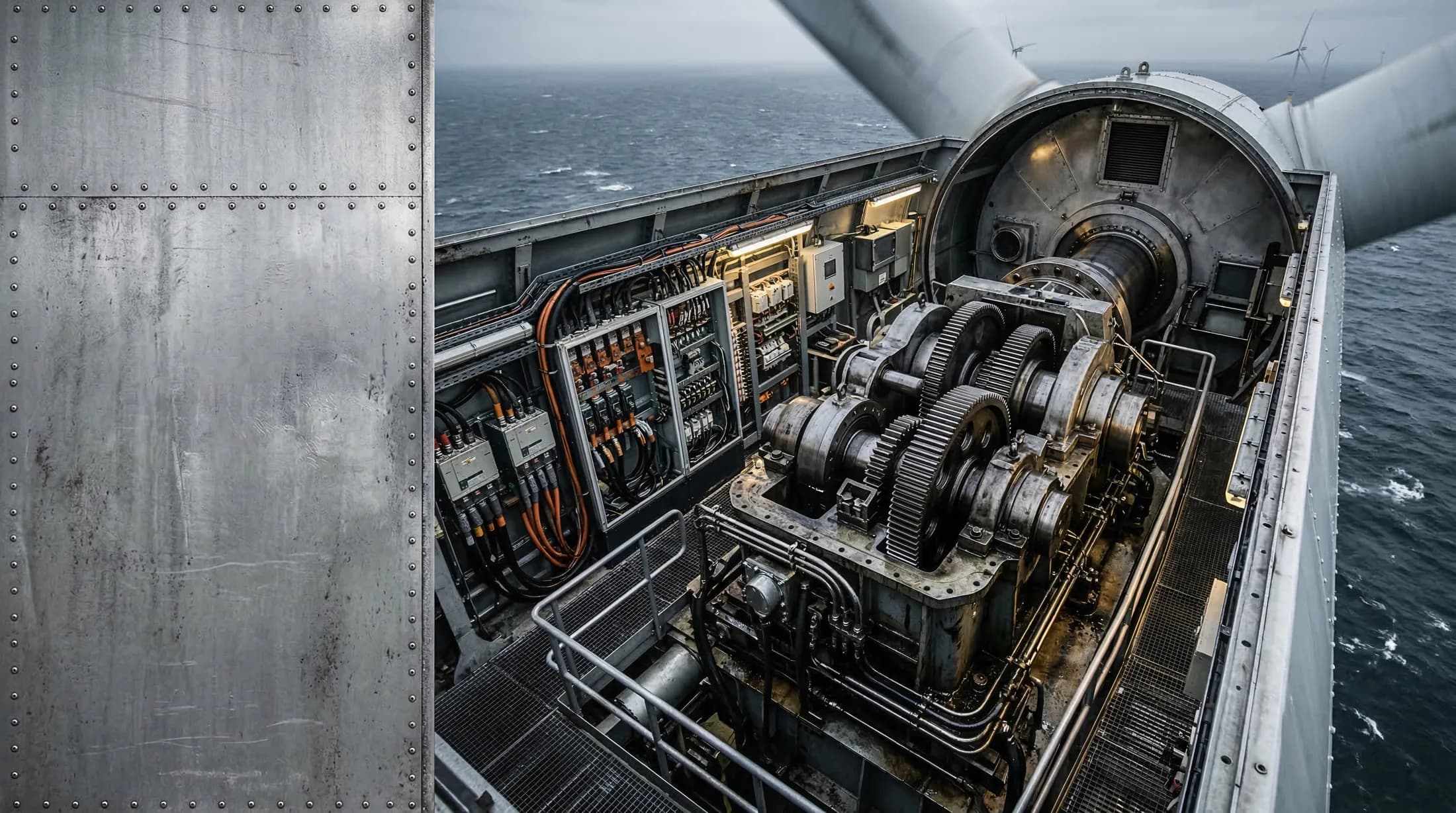
Turbine interiors are not one problem repeated. A tower in the Moray Firth holding persistent condensation is growing something different from a nacelle running warm off the Norfolk coast. The coating specifications differ. The access method differs. What a crew can realistically carry up differs. A formulation that suits one of those is not automatically the right answer for the other.
So we would rather start with a sample than a sales call.
Five steps, and the sampling costs you nothing extra
The whole process is built around a visit you are already paying for, because the quickest way to kill a good idea offshore is to make it need its own boat.
Tell us about the asset
A short call covering how many turbines, tower height, what your crews are actually seeing and where. Photographs help more than you would expect. If what you describe sounds like a water ingress problem rather than a chemistry one, we will say so at this point and save us both the trouble.
We send a sampling kit
Swabs, tape lifts, labels, instructions and a prepaid return. Your rope team takes the samples during a visit that is already in the diary, so there is no extra mobilisation, no extra day rate and no separate weather window to find.
The laboratory identifies what is growing
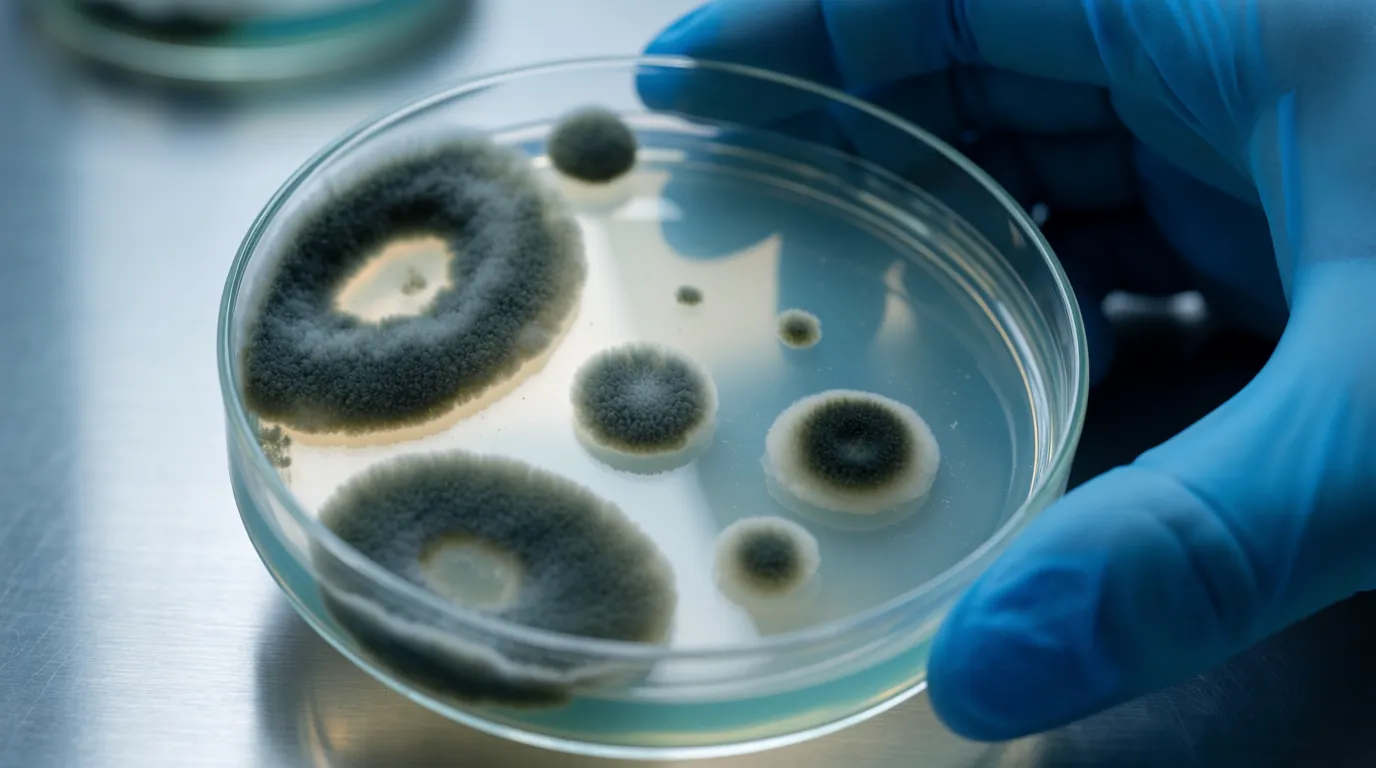
Which moulds are dominant, whether there is bacterial biofilm or algae in the mix, and how established the colonisation is. You get that report whether or not you go on to order anything.
We match the formulation to the findings
The blend is built around what the analysis found, what your surfaces are made of and how your teams actually apply it. The specifics of what can be changed are set out below.
Trial batch, then production
A batch to trial on one turbine, supplied with its own Safety Data Sheet, COSHH support data and a method statement written around your access method. Production follows once you are satisfied it performs.
14 days from the spore report landing with the laboratory
We have split this into the part that runs to your schedule and the part we put a number against, because a single end-to-end figure would be a guess about when your next visit happens.
Scoping call
Turbine count, tower height, what your crews are seeing.
Sampling kit sent
Swabs, tape lifts, instructions and a prepaid return.
Your crew samples
Taken on a visit already in your maintenance diary.
Laboratory analysis
Identification of what is actually colonising the interior.
14
days
From that point the turnaround is ours to hold, not yours to chase.
Specification
The report is read against your coating system, your access method and your environmental constraints.
Blending and testing
Proportions of established actives are adjusted and the blend is checked for stability and surface compatibility.
Documentation
Safety Data Sheet, hazard classification, COSHH support data and a method statement written for your method.
The specific things a laboratory can change for you
Being concrete about this matters, because plenty of suppliers say bespoke and mean they printed your name on the label. Equally, none of this is experimental. We are adjusting the proportions of established actives that are already in production and already supplied against a Safety Data Sheet. Nobody is trialling new chemistry on your asset.
Active concentration and blend
Which quaternary ammonium compounds go in and at what strength, set against what the analysis found and how established the growth is.
Wetting and surfactant package
Tuned to the soil type and to the surface, because smooth coated steel, a galvanised ladder and a composite panel do not behave the same way.
pH and coating safety
Held inside the band that leaves your ISO 12944 system, seals and composites intact. Your coating specification sets that limit, not our preference.
Additional actives
Where the analysis turns up something the standard blend will struggle with, the laboratory can bring in a second active rather than simply raising the dose.
Foam and cling
A vertical tower wall is not a floor. On rope access, how long the product stays where you put it matters more than how much of it got carried up.
Odour and confined space profile
Low odour stops being a nicety when a crew is sealed inside a tower for six hours. It is a specification input, not a marketing line.
Three numbers, and one of them comes back to you
The formulation work
No charge
Sampling kit, laboratory analysis and formulation development are on us.
To book a laboratory slot
£100
Credited in full against your first order, and refunded if we conclude we cannot help you.
Minimum first order
20 × 5L
100 litres of concentrate, which makes 600 litres of working solution.
Why a deposit on a free service?
Because laboratory time is the scarce thing here, not the chemicals. A booked slot that nobody follows through on costs us a week we could have given to somebody else. The £100 comes straight off your first invoice, so if you order it has cost you nothing, and if we tell you we cannot help, you get it back.
A paperwork pack your assessor can actually use
A bespoke formulation is a new product in its own right, so it gets its own documentation rather than inheriting ours. That is real work at our end, and it is the reason the minimum order exists.
What this will not do
Chemistry is not the whole answer, and we will not pretend otherwise
Mould inside a turbine is a moisture problem before it is a chemical one. A tower is ventilated to the outside, so spores drift back in regardless of what anybody puts on the surface. No formulation we make, or anyone else makes, changes that. If the analysis suggests your real issue is water ingress or ventilation, we will tell you, and a better formulation will not be the thing that fixes it.
We also will not claim a formulation kills a named organism without the test data behind it. Where efficacy testing to a recognised standard is needed for your approval process, we will say so and quote for it separately rather than let you assume it is already done.
If you need product on site sooner than this
The formulation route takes as long as it takes, because sampling, analysis and development cannot be compressed into a week without one of them being done badly.
If you have turbines that need treating before all of that concludes, the standard formulation ships in seven days at published prices. Plenty of operators will want to start there and move to a matched formulation at the next maintenance cycle, once the sampling has been done alongside a visit.
The things people ask before they commit
What does the custom formulation service cost?
The formulation work is free of charge, including the sampling kit, the laboratory analysis and the development itself. £100 books a laboratory slot and is credited in full against your first order, or refunded if we conclude we cannot help. The minimum first order is 20 containers of 5 litres.
How long does a custom formulation take?
14 days from the spore report reaching the laboratory. The stages before that point, the scoping call, the sampling kit, your crew taking the samples and the analysis itself, run to your own maintenance schedule rather than ours.
What if we do not already have a spore report?
We send out a sampling kit with swabs, tape lifts, instructions and a prepaid return. Your rope team takes the samples during a visit already in the diary, so there is no extra mobilisation, no extra day rate and no separate weather window. The laboratory produces the report from those samples.
Is this experimental chemistry?
No. We adjust the proportions of established actives that are already in production and already supplied against a Safety Data Sheet. What changes is the concentration and blend, the surfactant package, the pH within your coating-safe band, and where necessary an additional active. Nothing untested goes onto your asset.
What do we receive at the end of it?
The laboratory report identifying what is growing, a formulation matched to those findings and to your surfaces, its own Safety Data Sheet and hazard classification, COSHH support data, a method statement written around your access method, and the dilution ratio, contact time and coverage figures for your formulation.
Book a laboratory slot
Tell us about the asset and we will send a sampling kit out for your next scheduled visit. If it turns out we are not the right answer, we will say so.